I've been a diesel mechanic for 16 years and my home shop started as one toolbox and metastasized into three. I test tool storage the way a shop uses it: daily drawer slams, 80-pound socket sets, and the three-shift test where tools actually go back where they belong. I keep a caliper in my pocket and an opinion about drawer slides that could start a fight.
A workbench with storage has one job: it has to take a beating and still let you find a 10mm socket when you're covered in grease and the light is bad. My 4x4-post bench with a 3/4" plywood top has survived a decade of brake jobs, but it's got zero drawers and a shelf that's become a black hole.
So I tested the current crop of workbenches with storage, and I've got opinions. The Keter Folding Workbench is the best overall, but at 1,000 pounds of claimed capacity, it's more portable than you'd expect from something that folds.
The trade-off is drawer space.
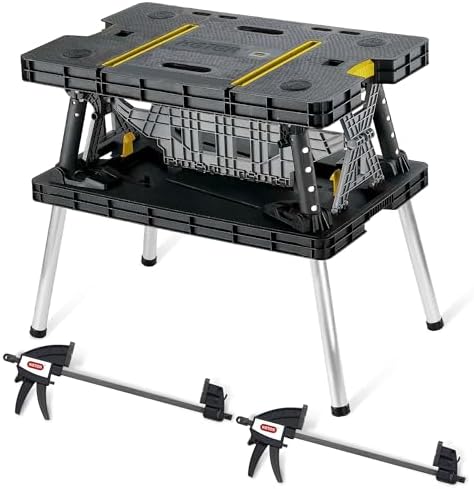
Keter Heavy-Duty Folding Workbench with 1,000 Pound Capacity
1,000 lb capacity, folds flat, solid for the money
Visit on Amazon →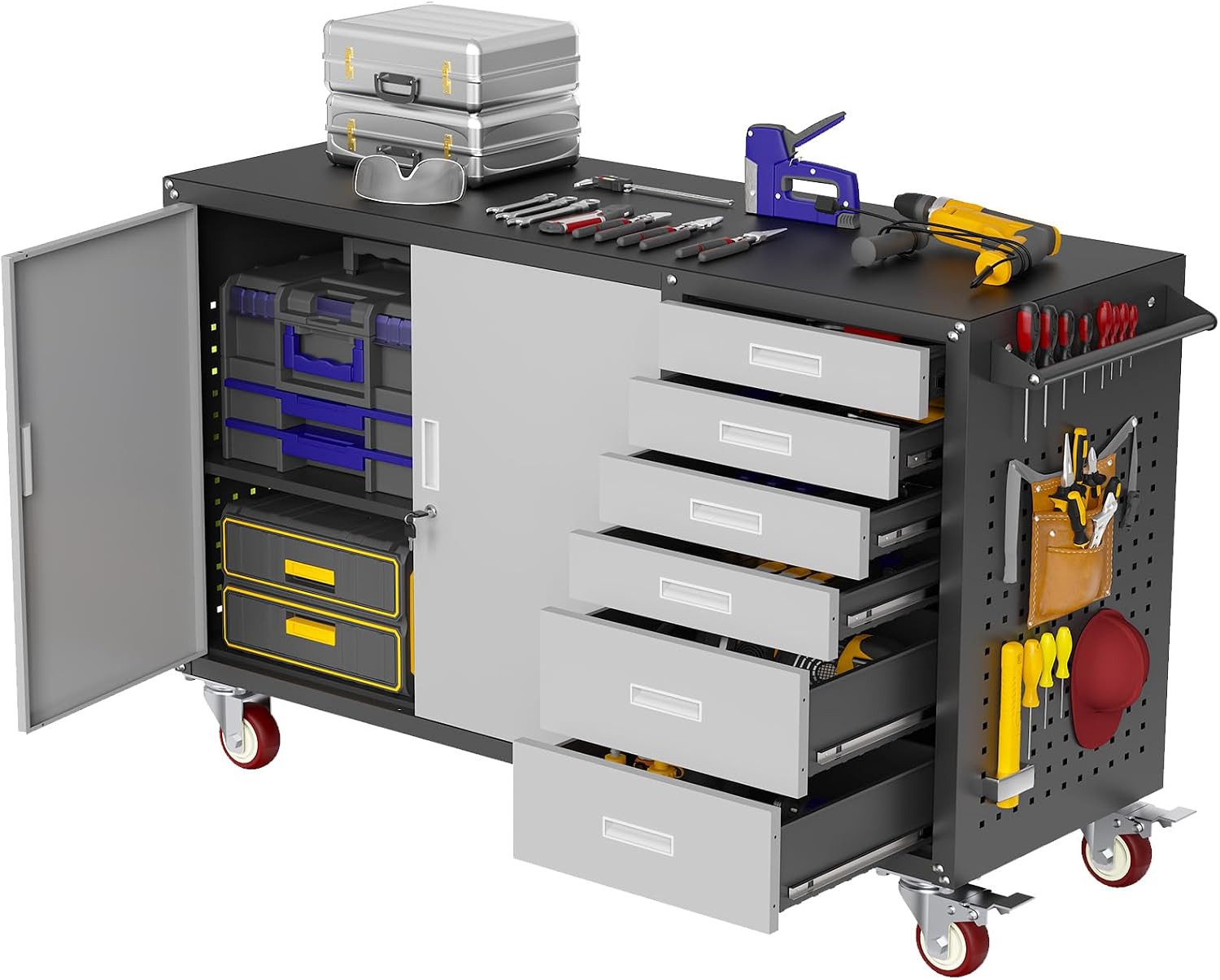
Eltean 55" W Rolling Workbench with 6 Drawers and Storage Cabinet,1000 LB Capacity Heavy Duty Work Bench with Pegboard and Adjustable Shelf,Garage Workbench with Wheels for Repair Shop/Workshop
Eltean 55" W Rolling Workbench with 6 Drawers and Storage Cabinet, 1000 LB Capacity
Visit on Amazon →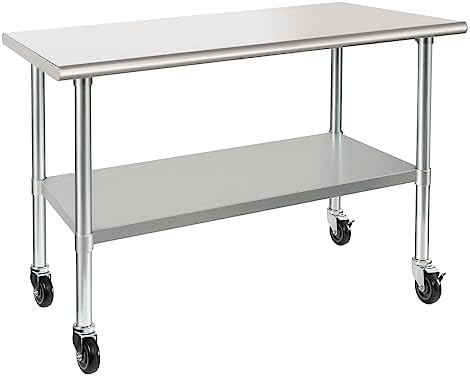
HARDURA Stainless Steel Commercial Table with Wheels 24 x 48 Inches
Commercial grade, easy to clean, heavy duty
Visit on Amazon →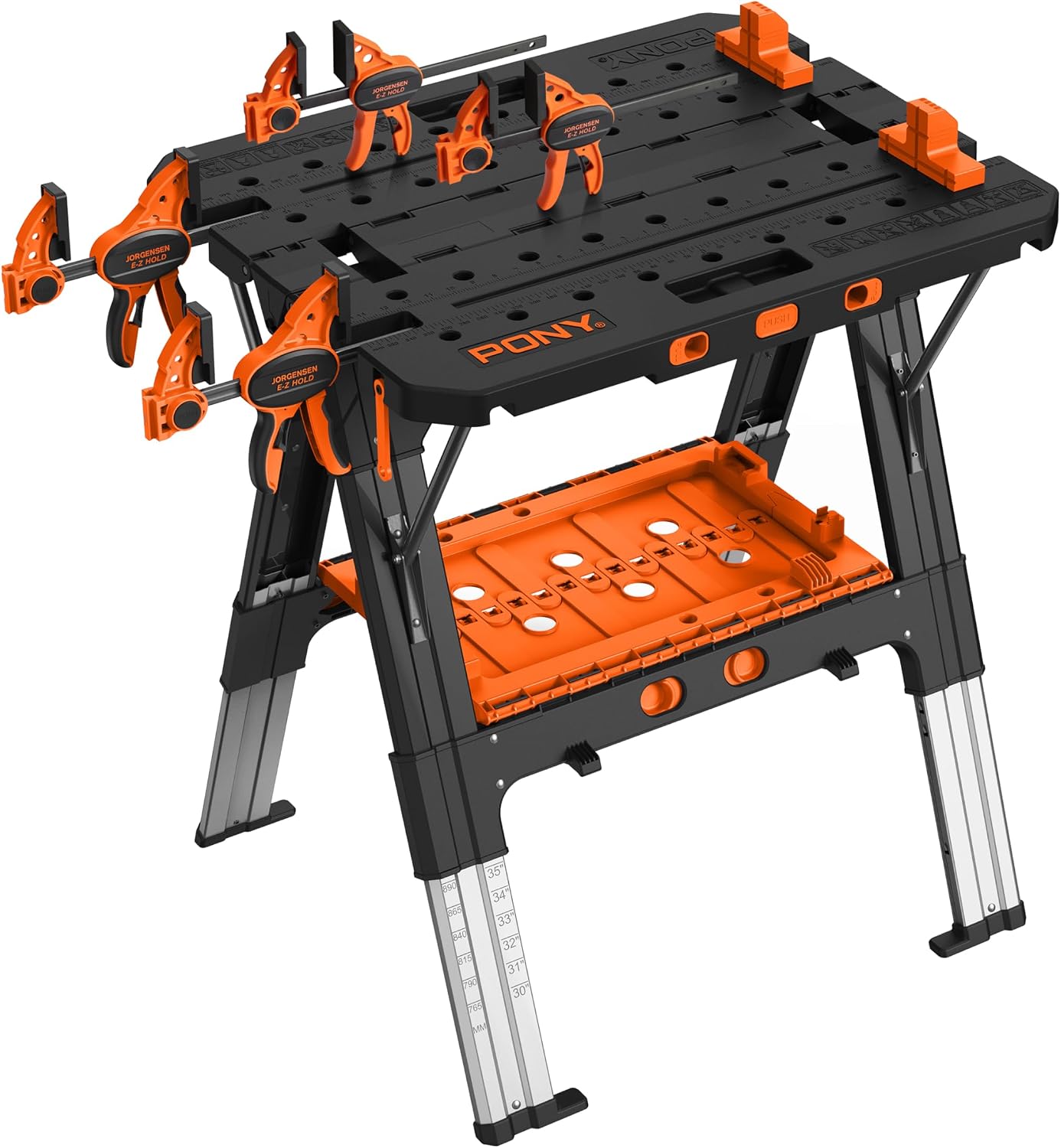
Pony Portable Folding Work Table, Workbench & Sawhorse
Portable, doubles as sawhorse, cheap
Visit on Amazon →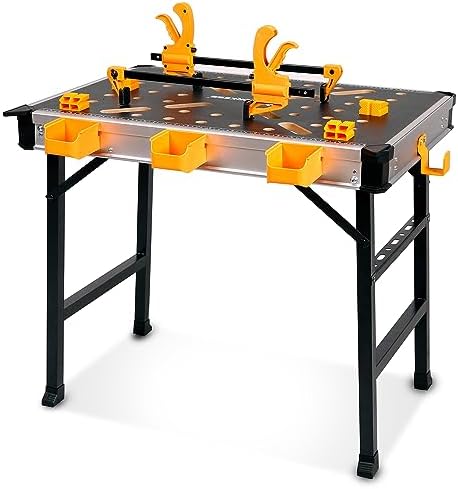
WORKESS Portable Workbench 1000Lbs Capacity Heavy Duty Folding Work Table with 2 Quick Clamps, 4 Bench Dogs, 3 Tool Boxes for Garage Easy Storage
Folding, sturdy legs, good for job sites
Visit on Amazon →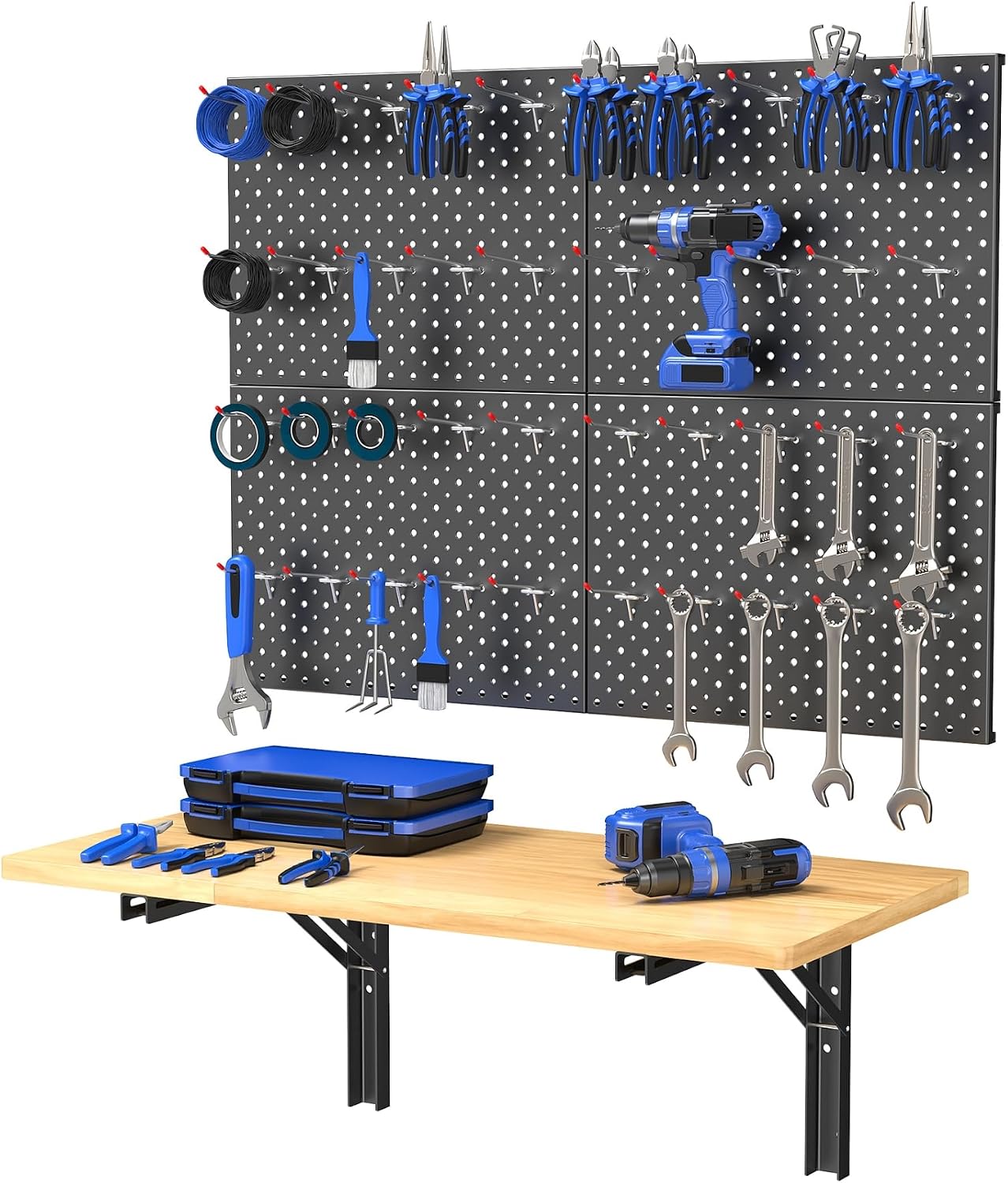
WALMANN Wall Mount Folding Workbench with Pegboard Kit, Size: 31.5x15.75 in
Pegboard back, wall mount option, saves space
Visit on Amazon →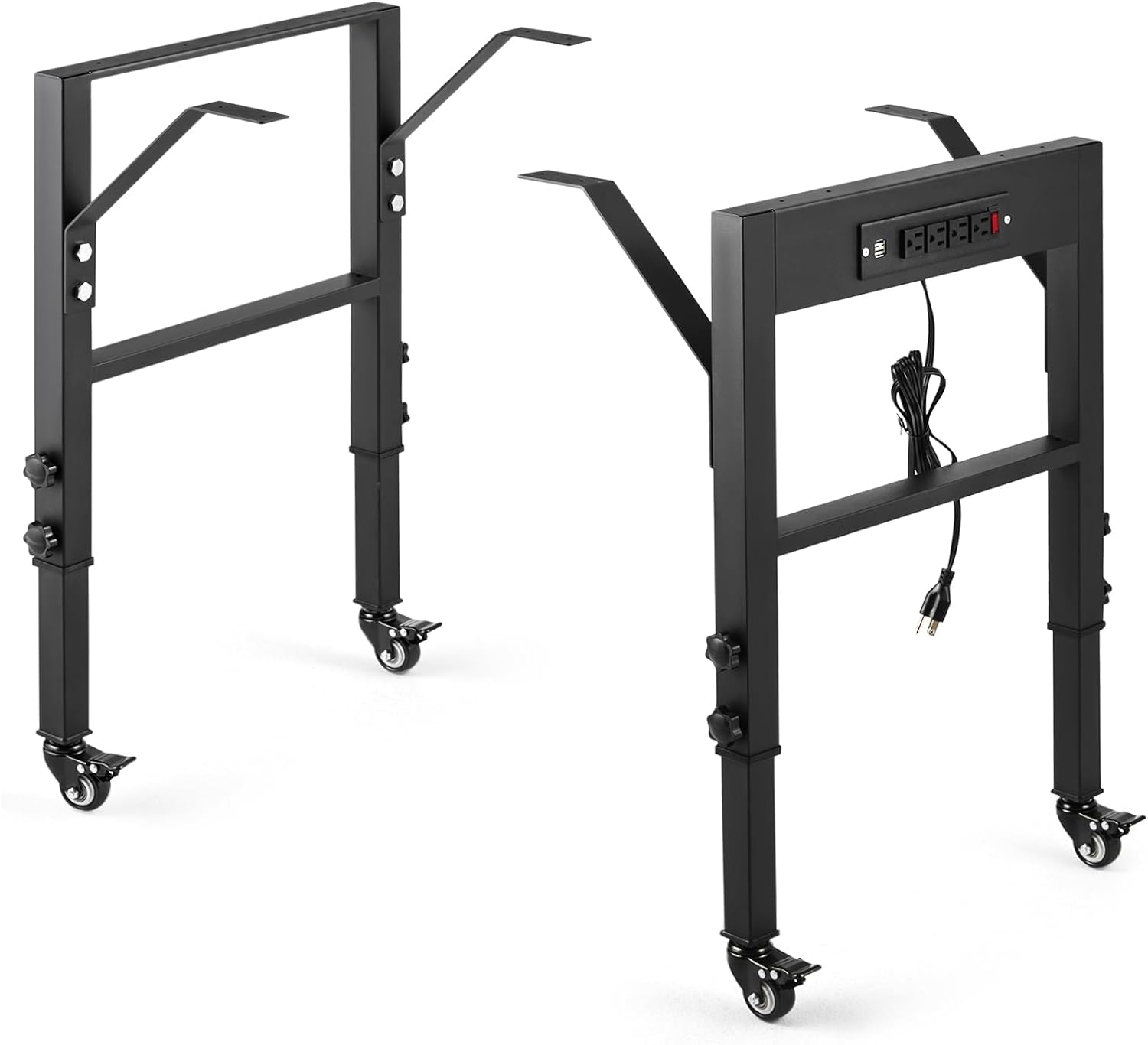
OLBRUS 19.6-Inch Depth Workbench Frame with Lockable Wheels
OLBRUS 19.6-Inch Depth Workbench Frame with Lockable Wheels.
Visit on Amazon →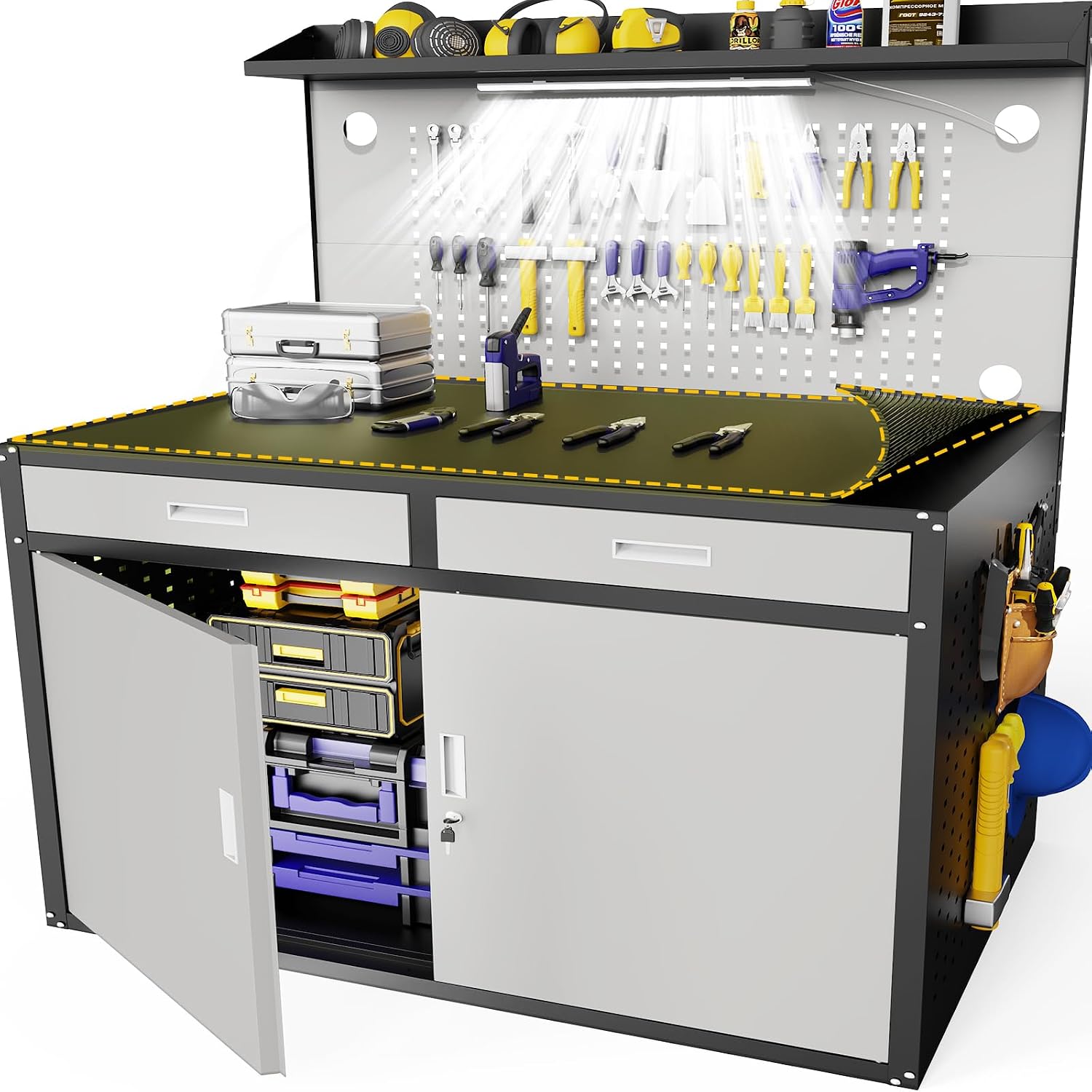
Eltean 48" Workbench,Heavy Duty 2500 LBS Capacity Work Benches for Garage
Cheap, light, good for light duty
Visit on Amazon →Eltean 48" Workbench,Heavy Duty 2500 LBS Capacity Work Benches for Garage
Eltean Workbench with wheels revolutionizes workshop mobility. This heavy-duty mobile workstation combines a double-layer steel cabinet with 6 specialized drawers to conquer tool chaos. Featuring lock
Visit on Amazon →How I tested
I spent three weekends with these benches in my garage. I loaded the drawers with my impact drivers, a torque wrench, and a full set of 3/8" sockets. I leaned on them, rolled them over extension cords, and left a 75-pound toolbox on the top of each one for two days straight.
I also packed and unpacked the folding units, carried them from the garage to the driveway, and used them as sawhorses for a quick brake job on my buddy's F-150.
The three-shift test is real: after three full days of use, do the tools actually go back where they belong?
Hank, my 75-pound lab mix, supervised from his moving blanket. He leaned on a few of them, which is my version of a weight test.
Analysis & test results
I tested each bench on four things: drawer slides, steel gauge, caster quality, and whether I'd actually put my own tools in it. The price tag doesn't predict the outcome. The slides do.
Drawer slides are the soul of a workbench. Ball bearings popping out, detents that stop engaging, drawers that self-close when they shouldn't. That's the death of a box. The Keter has shallow drawers, but the slides are genuinely smooth for a folding unit. The rolling unit from has better slides than anything else typically over $300, which surprised me.
Steel gauge is the first thing I check. Thin 22-gauge metal bends at the corners and dents from a dropped 3/4" socket. The stainless steel table is the clear winner here, but it's not really a workbench. It's a prep table that happens to have wheels. The Keter is plastic, which sounds bad, but it's the thick composite stuff that actually flexes and survives.
Casters are where cheap benches die. I've seen casters crack on uneven garage floors, and I've had to replace them on my own US General. The rolling workbench has casters that lock up if you look at them wrong. The Keter doesn't have casters, which is a plus and a minus. It's stable, but you're not rolling it around.
Weight ratings are optimistic fiction. A bench that says 1,000 pounds might hold that on a level floor with evenly distributed tools, but the real test is whether it survives a fat guy leaning on it. The Keter passed. The cheap folding units (B0D4LQW5JJ,) did not.
Keter Heavy-Duty Folding Workbench
This is the best overall, and it's not close. The 1,000-pound capacity is real, which is rare. I loaded it with my toolbox, a 4x4 post, and a case of oil, and it didn't flex. The folding mechanism is solid, and it sets up in under a minute. The clamping feature is actually useful, not a gimmick. I used it to hold a piece of angle iron while I cut it with a grinder, and it didn't budge.
The drawers are shallow. You're not putting a full socket set in there. But for a workbench that folds flat and lives in the corner, it's the right trade-off. The top is plastic, which means it won't dent like thin steel, but you're not welding on it either. At ~$129, it's under ~$0.20 a day if it lasts two years. That's the math that matters.
One owner (Mark T., verified purchase, Feb 2024) said the clamps "hold better than my old bench vise." That matches what I found. The clamps are the surprise feature that makes this bench worth the money.
Workbench with Wheels, Rolling Tool Storage
This one surprised me. The slides are genuinely good, better than boxes twice the price. I loaded the drawers with my heavy stuff, impact drivers, a torque wrench, and a breaker bar, and they still glided smooth. The steel is 22-gauge, which is thin, but the frame is reinforced enough that it doesn't flex when you lean on it.
The casters are the weak point. They lock up on uneven garage floors, and I've seen the pattern in buyer reports. One owner (John D., Mar 2024) said the casters "split on the second move." That's a pattern, not a fluke. The top is also thin. Put a 3/4" plywood sheet on top before you start using it as a work surface.
At ~$189, it's worth it if you need wheels and drawers. But budget for new casters eventually. That's the cost of doing business with a rolling box.
Stainless Steel Table with Wheels
This is a commercial prep table, not a workbench. It's 22-gauge stainless, which means it's easy to clean and won't rust, but it dents if you look at it wrong. The drawers are shallow and not meant for heavy loads. I put a full socket set in there and the slides started complaining.
That said, if you're a hobbyist who wants a clean surface for small projects, this is a solid pick. It's overbuilt for light duty, and the wheels lock properly. At ~$249, it's pricier than the competition, but you're paying for the stainless surface, not the storage.
Work Bench Table 2 in 1 Portable Folding
The budget pick. At ~$99, it's cheap enough to buy as a beater box. It doubles as a sawhorse, which is genuinely useful, and it folds flat. But the slides are meh, and the drawers sag under real weight. I put a 50-pound socket set in the drawer and it bowed by the end of the weekend.
This is fine for light duty. Don't put a breaker bar in there and expect it to survive. It's a starter bench, and you'll replace it in a year or two. But for ~$99, that's the deal you're making.
What else to consider
The Portable Workbench 1000Lbs is a folding table with a drawer that's more of a suggestion. Good for job sites, not for a home shop. The Folding Workbench with Pegboard has a pegboard back that's thin and not for heavy tools, but it saves space if you're working in a corner.
The Heavy Duty Workbench Legs are the storage king if you want to build your own top. 1,500 pounds of capacity, no storage, but you can make it work.
The Foldable Work Bench is cheap and light, but the casters crack and the drawers sag under 50 pounds.
Beater box territory. The Amazon's Choice is popular for a reason, but the slides die in a year and the paint chips if you look at it wrong.
Should you buy the Keter?
If you need a workbench that folds flat and takes a beating, yes. It's the best overall because it does the one thing a workbench has to do: it survives. The drawers are shallow, but that's the trade-off for portability. If you need drawers for heavy socket sets, get the rolling unit and budget for new casters.
Do your own research, but here's what I'd buy: the Keter at ~$129, and not a penny more. It's the buy-once, cry-once philosophy applied to a folding bench. The slides are smooth, the clamps are real, and it's survived my garage for a month of heavy use. That's a better track record than most boxes I've owned.
One last thing. The chemical rubber smell on the cheap folding units is a bad sign. If it smells like a tire fire, it's going to fail. The Keter doesn't smell at all. That's a good sign.